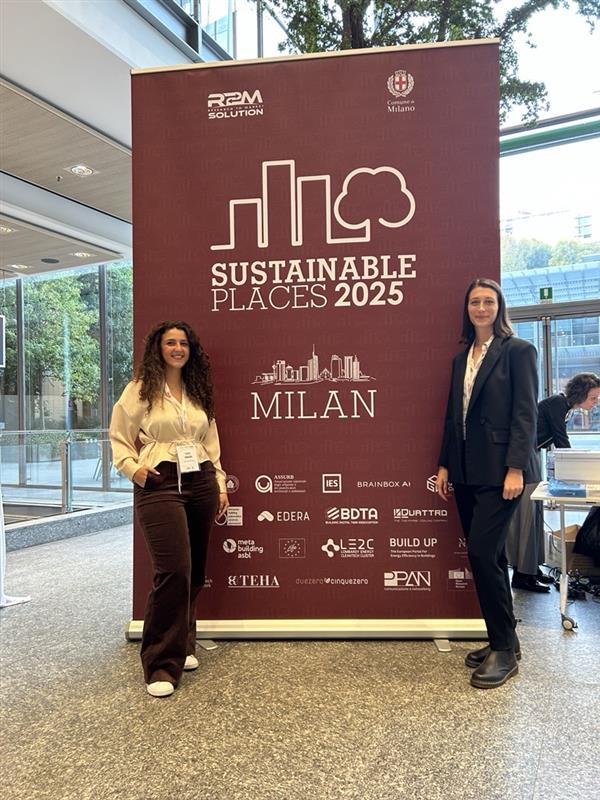
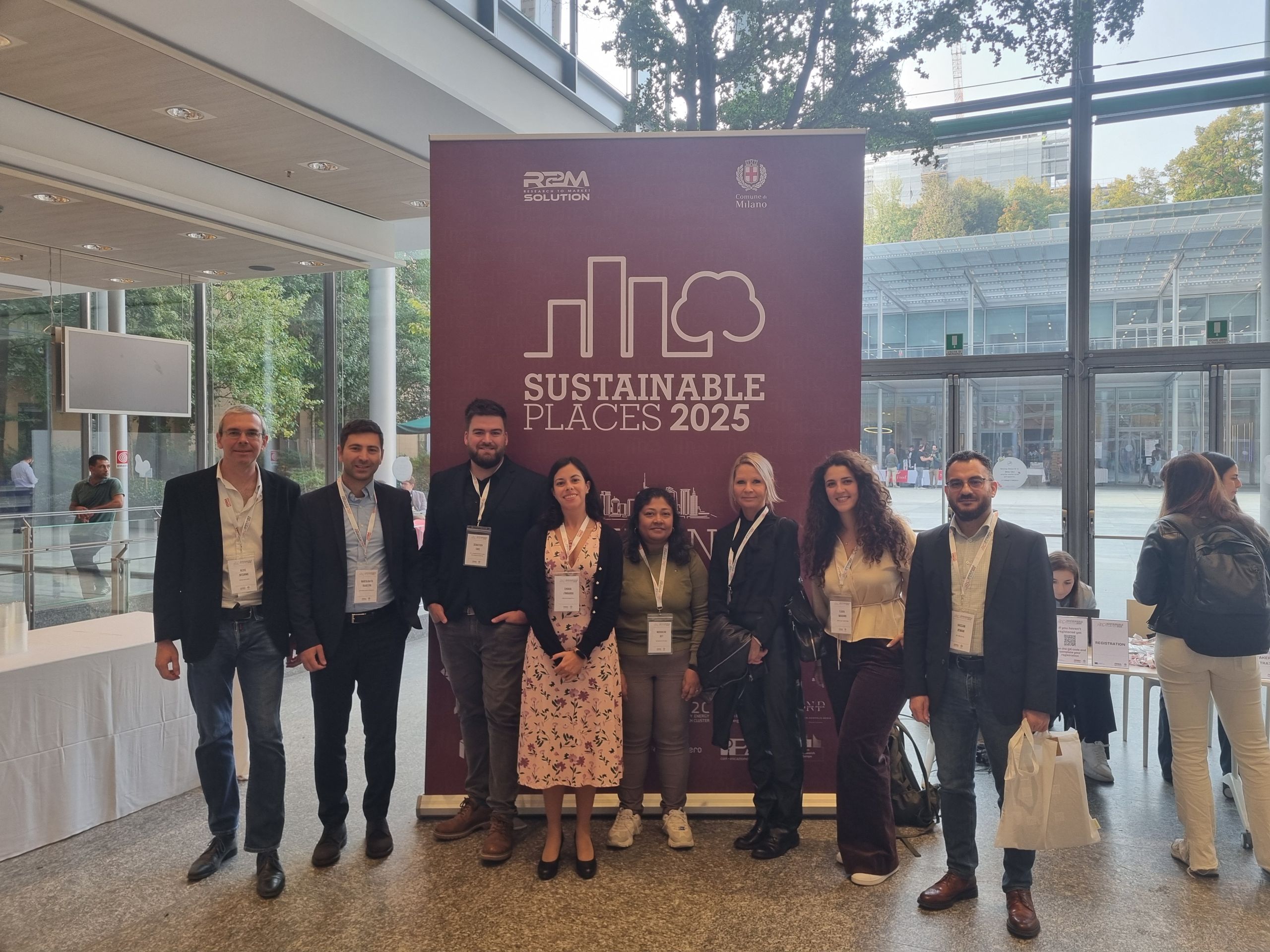
Digital for Planet participated in the Sustainable Places Conference 2025, one of Europe’s leading events dedicated to accelerating the green and digital transition. Hosted in Milan, this year’s edition brought together researchers, policymakers, and industry innovators to explore how data, digitalisation, and collaboration can drive sustainability across cities, buildings, and communication networks.
From data centres and AI for sustainability to human-centred digitalisation and smart city innovation, the conference highlighted how emerging technologies can enhance energy efficiency, urban resilience, and environmental performance. Sessions organised by the Comune di Milano, the Open Geospatial Consortium, and the Italian Proptech Network showcased concrete solutions, from the Digital Building Permit and climate data visualisation tools to AI-driven energy optimisation and digital twins for decarbonisation.
At its core, Sustainable Places 2025 emphasized a shared European goal: ensuring that digitalisation supports a climate-neutral, inclusive, and resilient society
6G4Society: Towards Sustainable 6G
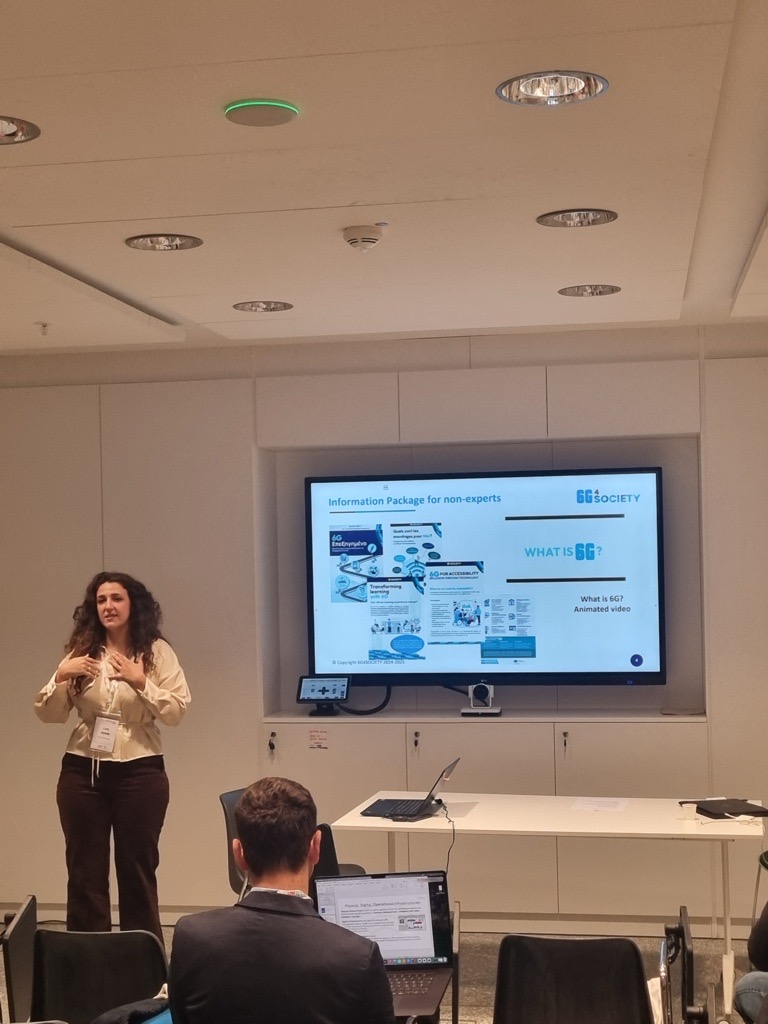
Within this framework, Digital for Planet represented the 6G4Society project at the session “Towards Sustainable 6G – Part II: Progress and Perspectives from R&I Projects on Greener Network Futures.” The discussion brought together leading research initiatives exploring how next-generation connectivity can be designed to minimise environmental impact while maximising societal value.
Digital for Planet contributed insights on how sustainability must be embedded by design in future 6G networks, from improving energy efficiency and lifecycle assessment to integrating human-in-the-loop and citizen engagement models. These approaches ensure that digital transformation remains transparent, equitable, and aligned with global climate goals.
Data, Digital Twins, and AI for Sustainability
A central theme of this year’s event was the intersection between digital infrastructure and sustainability. The session “Data Center, Digital Twin & AI for Sustainability”, co-organized with the Italian Proptech Network, gathered technology providers, researchers, and policymakers to examine how data-driven innovation can transform the built environment.
From high-efficiency cooling technologies and energy optimization systems to AI-enabled predictive modelling, speakers demonstrated how digital tools can reduce the environmental footprint of data centres and accelerate decarbonisation. Discussions also addressed the growing strategic role of digital infrastructure for Europe’s competitiveness, advocating for responsible regulation, interoperability, and cross-sector collaboration.
The conversation extended beyond technology to the social dimension of digitalisation. Participants explored “human-in-the-loop” approaches, ensuring that citizens, communities, and end users play an active role in shaping digital energy services. Real-world examples from projects such as Crete Valley, DEDALUS, EnerTEF, and ENPOWER illustrated how co-creation and transparency can enhance trust, social acceptance, and long-term resilience in Europe’s clean energy transition.
From Data to Actionable Intelligence
Another focal point of Sustainable Places 2025 was how cities can harness data for sustainability. Organized by the Comune di Milano and the Open Geospatial Consortium, the session “Overcoming Barriers to Impact” examined how local governments and R&I projects are translating complex data into actionable intelligence for climate adaptation and urban planning.
Case studies from Milan, Medina, and Ferrara showcased smart city dashboards, digital twins, and open data ecosystems that are helping urban managers design more livable, low-carbon environments. The FOCAL project demonstrated how climate data can be operationalised for planners, while experts from the Building Digital Twin Association and EUnet4DBPs highlighted the role of international standards in enabling interoperability and scalability across European cities.
The discussions converged on a key insight: data is powerful only when it becomes accessible, trusted, and actionable, a vision shared by Digital for Planet in its own work on sustainable digital ecosystems.
Sustainable Urban Design: Positive Energy Districts and Flexible Energy Communities
On Day 3, Digital for Planet also participated in the engaging thematic session “Sustainable Urban Design: Positive Energy Districts & Flexible Energy Communities,” co-organised by R2M Solution, PENTA, and CERES.
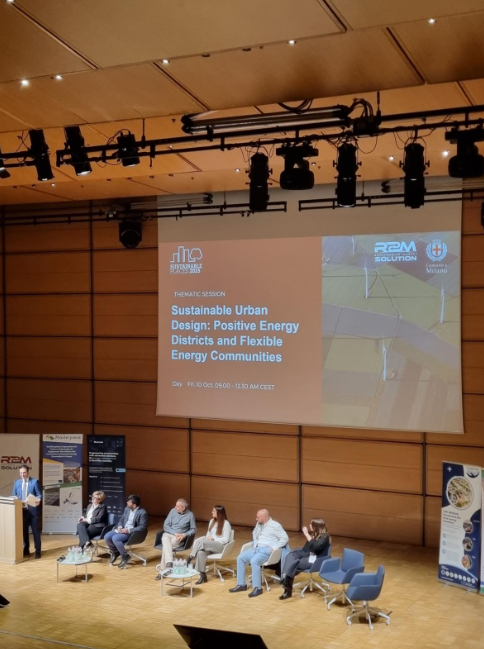
This session highlighted how Positive Energy Districts (PEDs) and flexible energy communities are becoming cornerstones of sustainable urban development. Discussions focused on:
- Citizen engagement as a catalyst for resilient energy communities
- Integrated design strategies for PEDs
- Replicable tools and best practices for scaling
- A forward-looking debate with urban planners, municipalities, and researchers
From innovative energy platforms (e.g., FEDECOM, STUNNED, MASTERPIECE) to neighbourhood-scale renovation models (Giga Regio Factory, Reno Tides), the session brought forward practical tools and inspirational insights.
This session was particularly valuable for the newly launched Horizon Europe project BLOSSOM, in which Digital for Planet leads communication and dissemination activities. It allowed us to:
- Gather insights from leading EU-funded initiatives
- Build connections with like-minded projects and stakeholders
- Bring back knowledge to apply across BLOSSOM’s Living Labs and Communities of Practice
Strategic Citizen Engagement in Positive Energy Districts
In the afternoon, D4P took part in the workshop “Strategic Citizen Engagement and Impact in Positive Energy Districts: Insights from EU-funded Projects,” which offered a deep dive into the social innovation driving PED success across Europe.
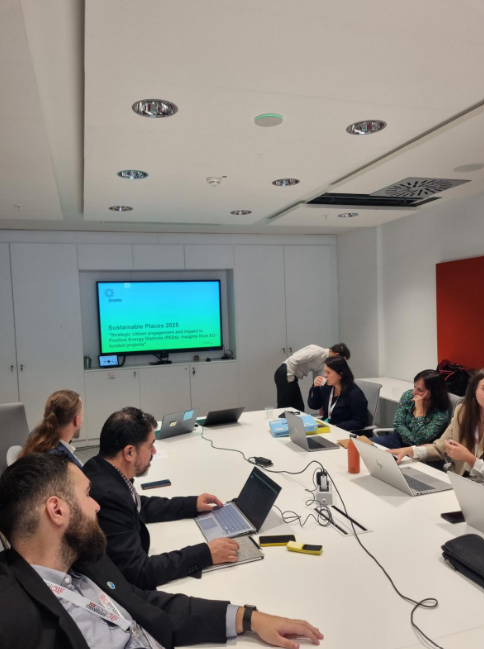
The session featured contributions from nine Horizon Europe projects, including InterPED, TIPS4PED, ARV, COMMUNITAS, and NEUTRALPATH, among others. Key themes included:
- Citizen co-creation in PED design and operation
- Digital tools for engagement, participation, and governance
- Scaling local energy communities into sustainable urban ecosystems
This session underscored a critical insight shared by Digital for Planet: Europe’s energy transition is deeply societal, not only technical, and its success depends on active, empowered citizen involvement.
Digital for Planet’s Role and Impact
Through its participation, Digital for Planet reinforced its mission to bridge sustainability and digital innovation. As a consortium partner in 6G4Society and BLOSSOM, D4P contributes to shaping the sustainability dimension of Europe’s future communication networks, ensuring that 6G development aligns with environmental objectives, social inclusion, and human well-being.
Beyond 6G, D4P’s involvement at Sustainable Places 2025 showcased its broader impact across the European research landscape. By connecting technological excellence with social legitimacy, Digital for Planet continues to promote an innovation model that is sustainable, inclusive, and deeply human-centred, one that turns digitalisation into a force for positive environmental change.