
From 23–30 March 2026, the 2nd EU-Japan Digital Week 2026 brought together policymakers, researchers, and industry leaders from Europe, Japan, and the Indo-Pacific region to explore the future of digital technologies, cross-regional cooperation, and responsible innovation. The week emphasised collaboration in emerging technologies such as AI, high-performance computing, semiconductors, and digital infrastructure.
Digital for Planet was proud to be there with our President and Founder, Dr. Monique Calisti, who contributed her perspectives across several key sessions.
FRIDAY, 20 MARCH – SATURDAY, 21 MARCH
Pre-week Hackathon on Interoperability of Digital Public Infrastructure
The week began with a collaborative hackathon where teams from Europe, Japan, and the Indo-Pacific developed interoperable solutions for digital public infrastructure, testing new ideas in cross-border identity and data exchange. Participants refined their solutions through mentoring sessions and intermediate presentations. Co-organised by Dr. Franck Le Gall, (EGM, INPACE, France) and Prof. Noboru Koshizuka (The University of Tokyo, Japan), the hackathon encouraged experimentation around trusted data exchange and cross-border identity verification.
TUESDAY, 24 MARCH
Semiconductor Workshop “Japan–EU Cooperation on Advanced Computing, Advanced Functionalities, and Semiconductor Value Chains” (Day 1)
During the first day of the semiconductor workshop, experts explored semiconductor technologies, value chains, and energy-efficient innovations, highlighting opportunities for joint research and innovation between Europe and Japan. Co-organised by Dr. Francis Balestra (SiNANO Institute/CNRS, INPACE, France) and Prof. Ken Uchida (The University of Tokyo, Japan), discussions addressed topics such as smart sensors, process technology, manufacturing and sustainability. Participants also examined strategies for improving energy efficiency and reducing resource consumption in electronic systems while strengthening collaboration between Europe and Japan on next-generation semiconductor technologies.
Policy Workshop “Securing the Digital Horizon: EU-Japan Cooperation on Emerging Disruptive Technologies and Critical Infrastructure”
This closed-door policy-focused workshop was organised by Dr. Eva Pejsova (Vrije Universiteit Brussel (VUB), INPACE, Belgium) and examined how the European Union and Japan could strengthen cooperation on emerging and disruptive technologies, including artificial intelligence, quantum computing, and advanced semiconductors. Policymakers and researchers discussed regulatory frameworks, governance strategies, and collaborative research in AI, quantum computing, and other emerging digital technologies.
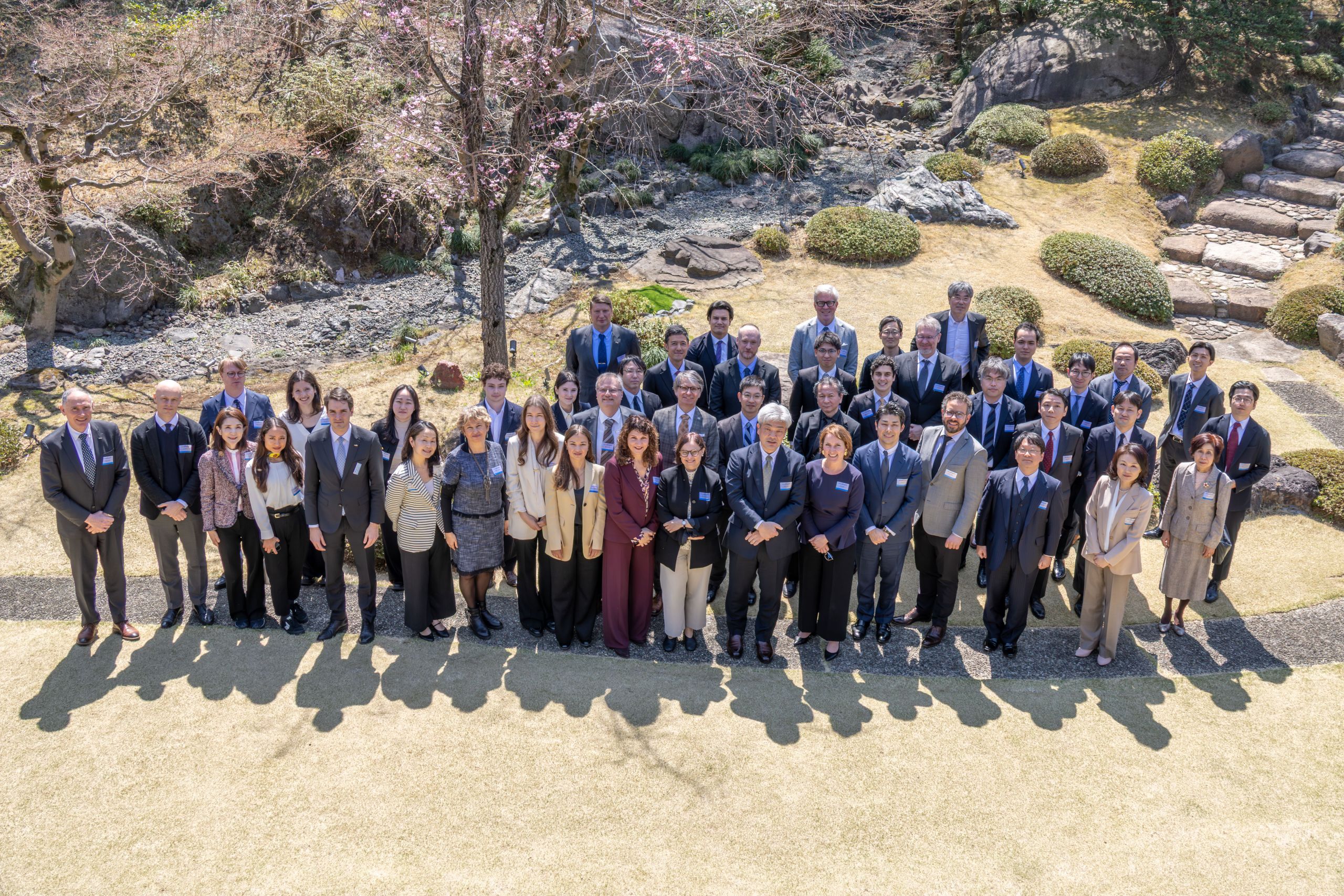
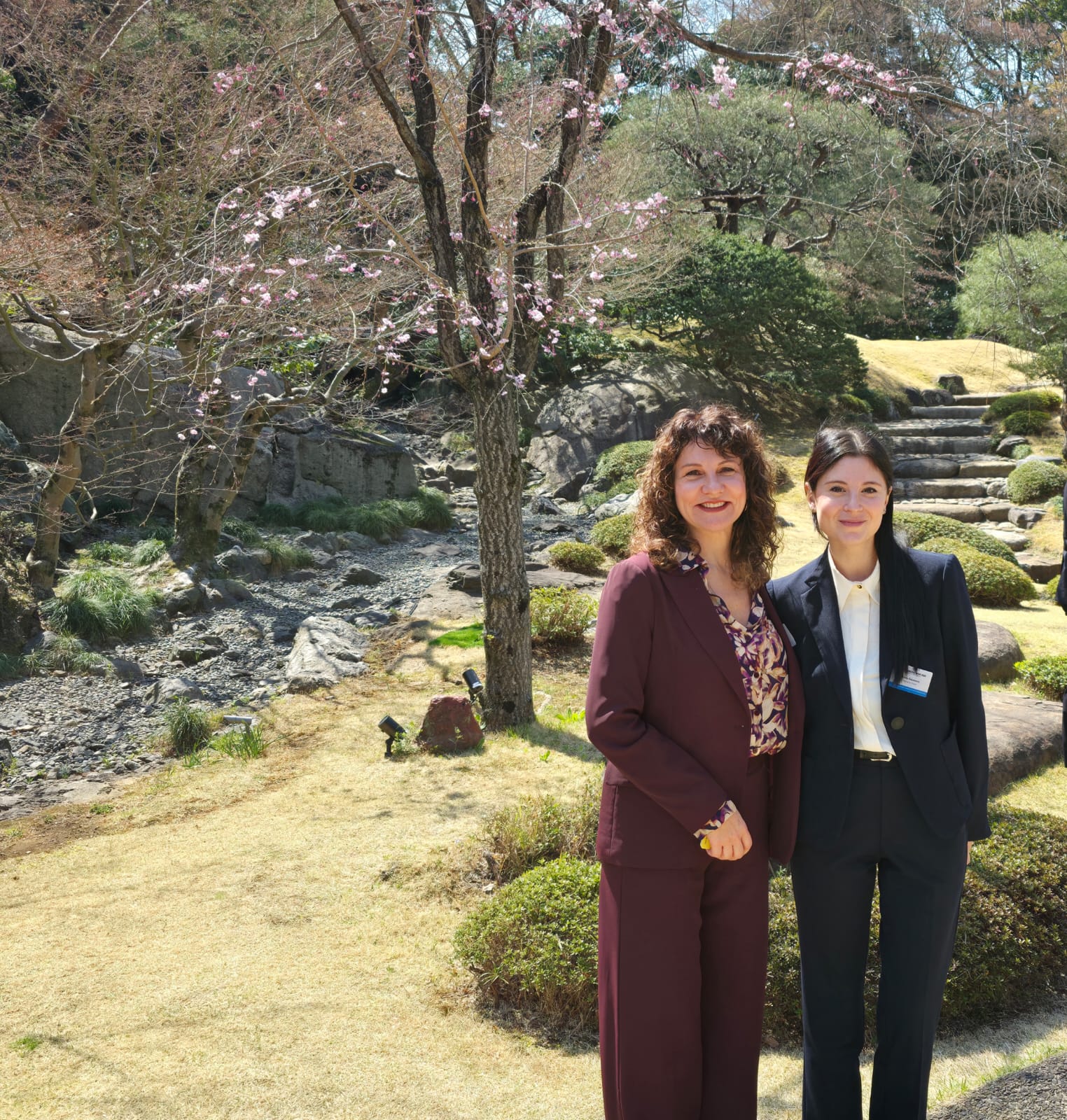
EU and Japan Partnering Up: Exploring Complementarities of Tech Business Offers
Co-organised by Jana Vinkel (International Relations Officer, International Affairs and Policy Outreach, DG CNECT, Belgium) and Anne Wenzek (Country Advisor, International Digital Policy, GIZ GmbH, Germany), this invitation-only exchange brought together representatives from public administrations and the technology sector to discuss opportunities for joint market exploration in third countries. The discussion mapped existing EU and Japan digital business offers and their complementarities, addressing market entry considerations, partnership models, and business development strategies.
WEDNESDAY, 25 MARCH
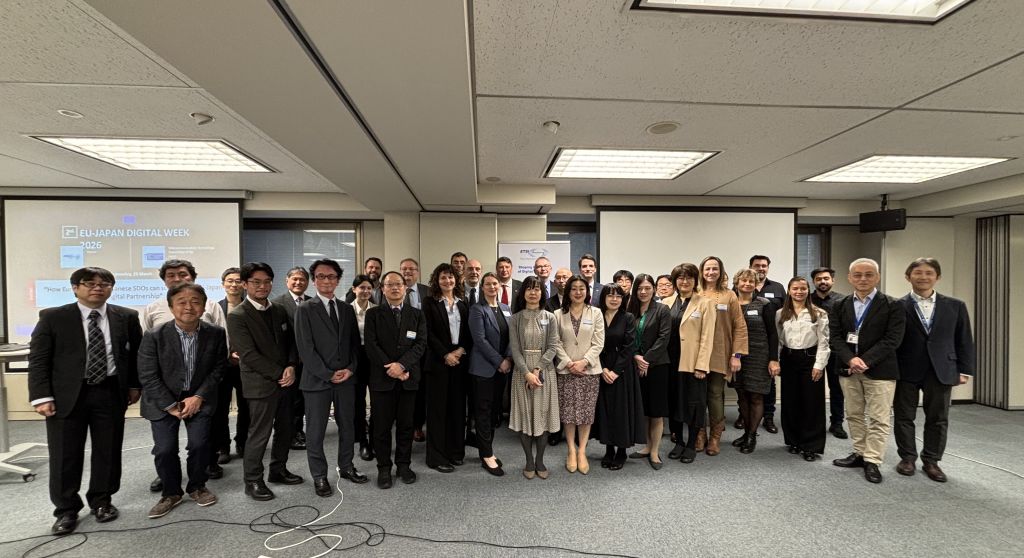
Event: “How European and Japanese SDOs can support the EU-Japan Digital Partnership”
The event was jointly organised by ETSI and Telecommunication Technology Committee (TTC), gathering participants to examine how standardisation in AI and quantum technologies can support global cooperation and strengthen the EU-Japan Digital Partnership. During the technical sessions, experts highlighted the importance of global standards in areas such as mobile and wireless communications, and data spaces and trusted data frameworks.
Semiconductor Workshop “Japan–EU Cooperation on Advanced Computing, Advanced Functionalities, and Semiconductor Value Chains” (Day 2)
Day 2 of the semiconductor workshop continued technical discussions on semiconductor research and innovation. Speakers learned about developments in heterogeneous integration and advanced packaging, new channel materials, semiconductor technology, and value chain. The session further explored opportunities for collaborative research and innovation across the EU-Japan semiconductor ecosystem and later focused on power devices, memory technologies, optoelectronics, and international cooperation.
THURSDAY, 26 MARCH
EU-Japan AI4Good cooperation: “Leveraging Extreme-Scale Computing for Societal Challenges”
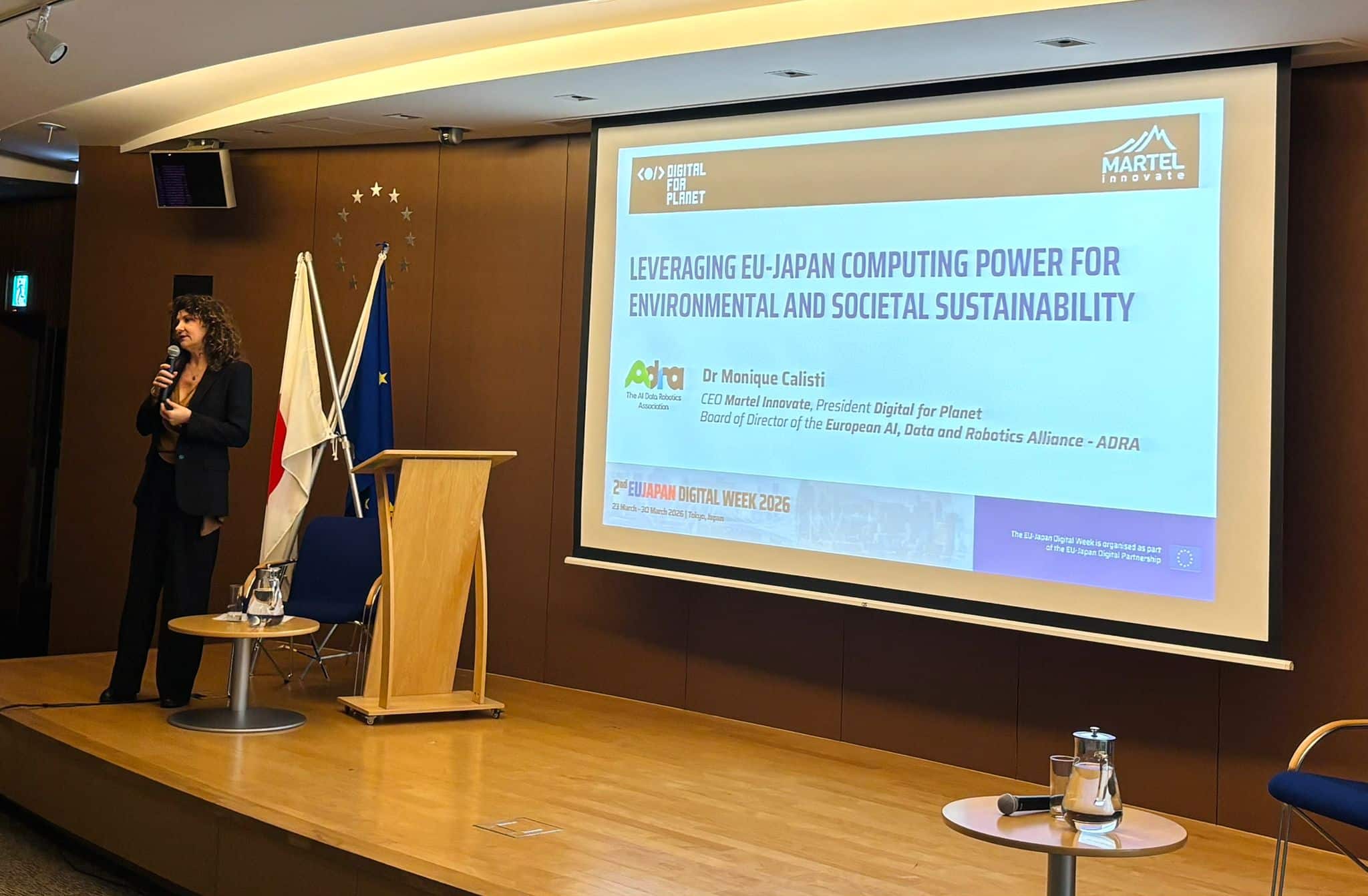
This event, co-organised by Dr. Rossen Apostolov (INPACE, NAISS, Sweden), RIKEN, Juelich Supercomputing Centre, and NAISS, highlighted cooperation in high-performance computing (HPC) between Europe and Japan. Participants discussed the use of flagship supercomputers to support artificial intelligence applications addressing societal challenges such as climate, health, and sustainable cities. The session also aimed to strengthen scientific collaboration between the EU and Japan through cooperation between RIKEN and JULICH, and establish a structure for sustained collaboration and an operational framework for Fugaku–Jupiter cooperation.
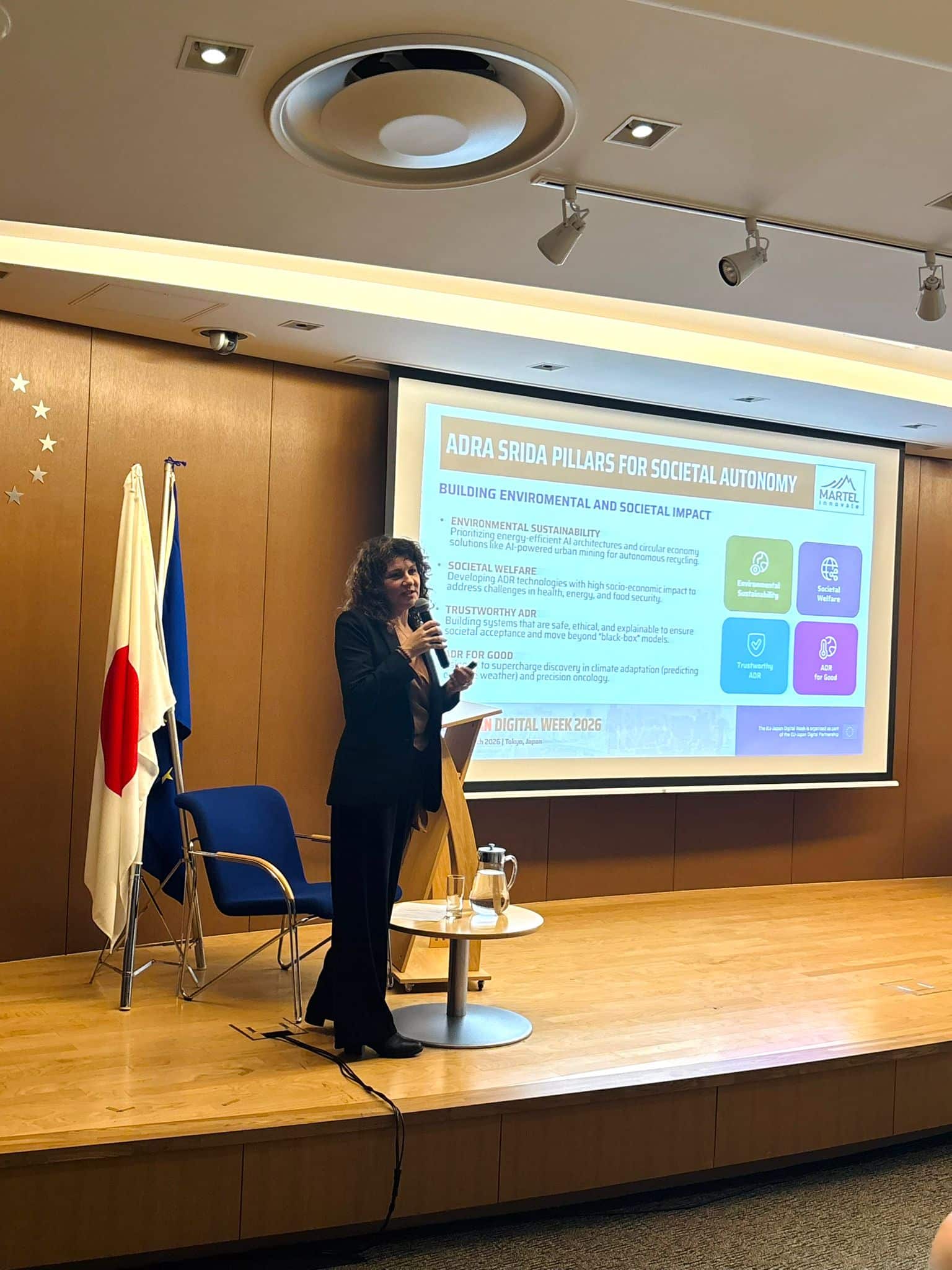
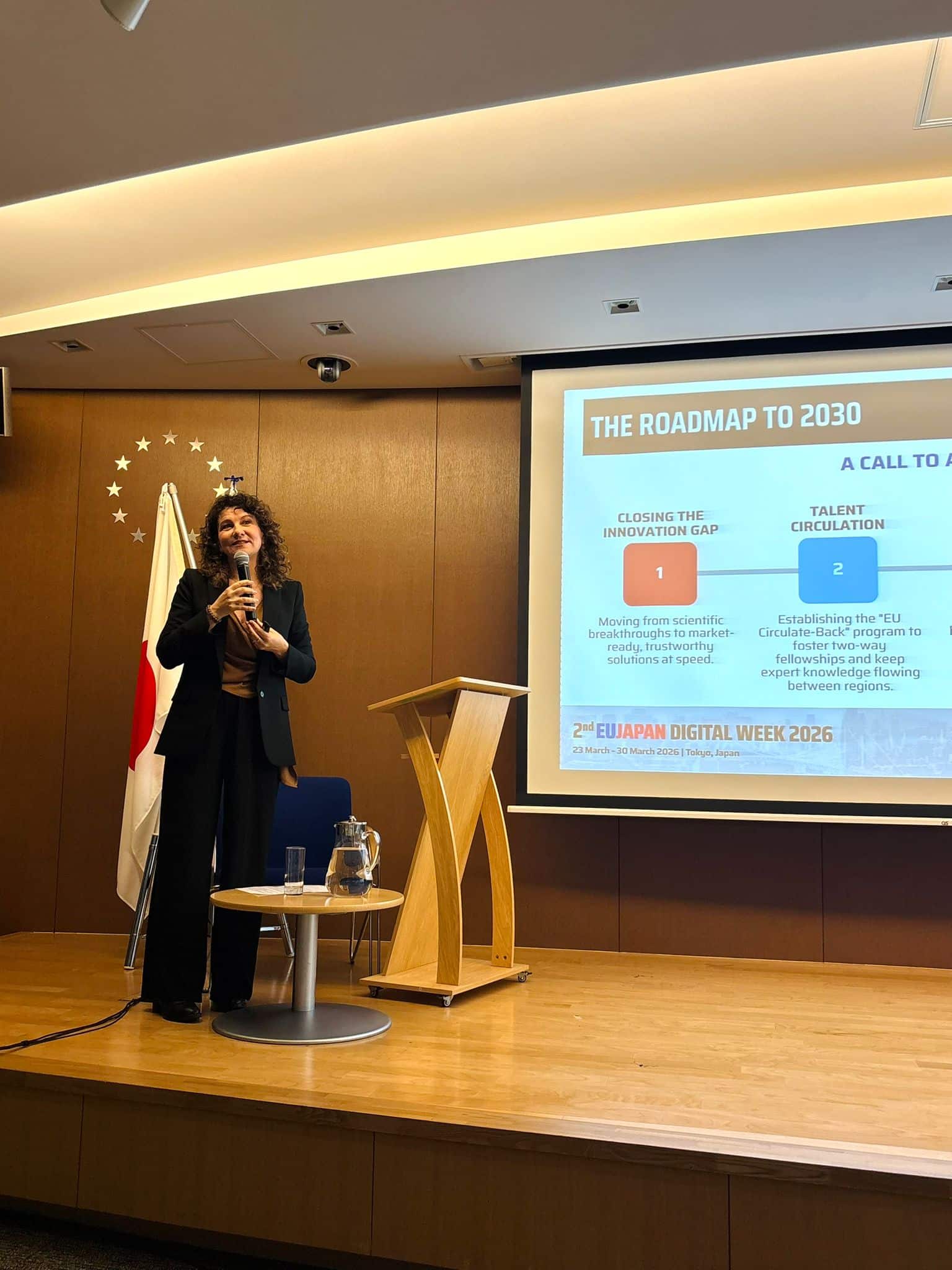
As a key speaker of the event, Monique contributed to the session on AI4Climate, highlighting environmental and societal sustainability and its key challenges and priorities. She took the stage to share a clear message: the future of AI must be built on responsibility, sustainability, and global collaboration.
Monique highlighted the core priorities of the ADRA SRIDA 2025-2027, specifically focusing on how to leverage exascale infrastructures like Fugaku and JUPITER to address the UN Sustainable Development Goals. By embedding “Sustainability by Design” into AI systems, the focus is shifting from how we build to why we build. The goal: minimise environmental impact, reduce algorithmic bias, and ensure no one is left behind.
A key theme resonated throughout her speech: The EU and Japan have a unique opportunity to set the global benchmark for AI4Good. The goal is transform innovation into real-world solutions that:
- Advance Climate Action (SDG 13)
- Improve Health and Well-being (SDG 3)
- Enable Sustainable Cities (SDG 11)
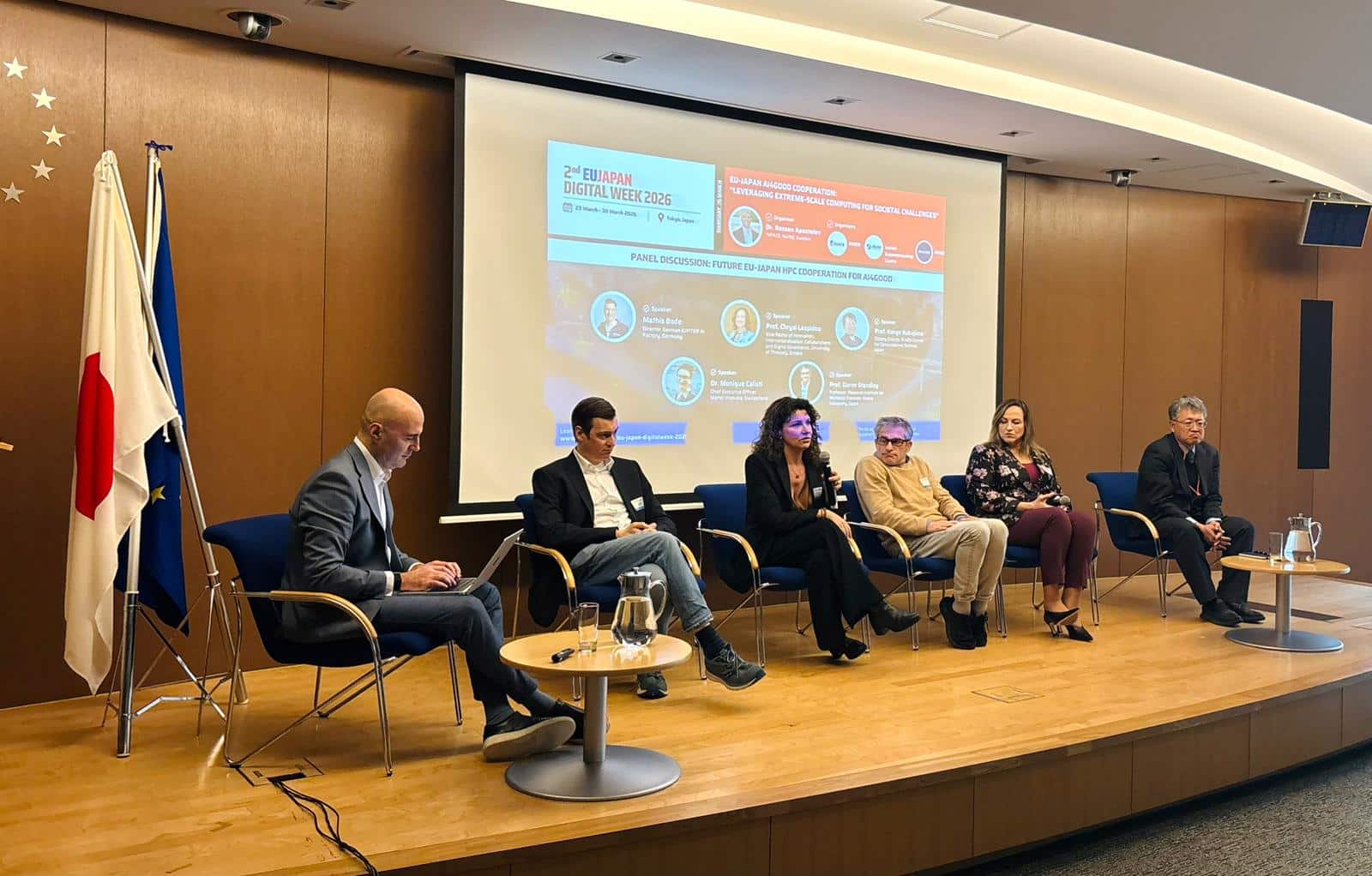
The session culminated in a panel discussion on the future EU-Japan HPC Cooperation for AI4Good, moderated by Rossen Apostolov, where Monique contributed to the exchange on strengthening collaboration frameworks and aligning EU–Japan efforts to maximise the societal impact of advanced computing and AI.

Advancing EU–Japan Digital Cooperation: Insights from the Week and Next Steps
This wrap-up and networking session reflected on the main outcomes of the week. During the session organised by Dr. Svetlana Klessova (G.A.C. Group, INPACE, France) and Adam Kapovits (Eurescom, INPACE, Germany), participants learned about key takeaways from the thematic sessions, focusing on insights on digital policy, technology innovation, and international collaboration. The hackathon concluded with final presentations by the participating teams, who showcased their solutions for interoperable digital public infrastructure. The session also featured EURAXESS presenting European funding opportunities for researchers and innovators in Japan and networking opportunities to foster new partnerships.
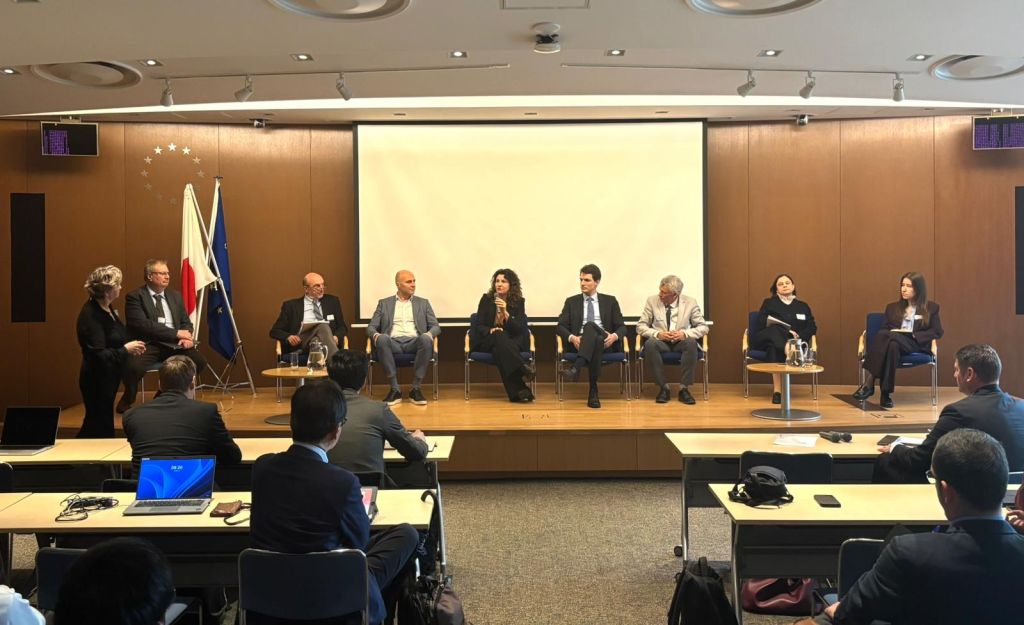
Monique contributed to the panel discussion of the session, providing key insights on EU-Japan digital cooperation beyond 2026.
Japan’s Association to Horizon Europe: New Opportunities to Enhance Collaboration in Research and Innovation between the EU and Japan
The seminar brought together European and Japanese policymakers, researchers, and other science, technology, and innovation stakeholders to explore new opportunities for collaboration. In this session lead by Maria Cristina Russo (Deputy Director-General for Innovation, Prosperity and International Cooperation, European Commission) and Thomas Skordas (Deputy Director-General for Communications Networks, Content and Technology, European Commission), participants discussed Japan’s association to Horizon Europe, identified concrete synergies and partnership pathways, and gained inspiration from successful examples of past cooperation under previous EU Framework Programmes.
FRIDAY, 27 MARCH
ICT Stakeholder Roundtable
The ICT Stakeholder Roundtable was organised by the Ministry of Internal Affairs and Communications and supported by INPACE, and gathered representatives from government, industry, and research communities to discuss strategic issues related to information and communication technologies. The discussions focused on Beyond 5G/6G, AI in Radio Access Networks, measures against dis/misinformation in online platforms, wireless power transfer, quantum, cybersecurity and data spaces technologies and the role of public private partnerships. As member of the Board of Directors of ADRA, Monique presented the association as a key interlocutor in the EU-Japan Digital Partnership collaboration.
MONDAY, 30 MARCH
Panel: “Leveraging Digital and Tech Diplomacy: Opportunities for a new partnership between Europe and the Indo-Pacific?”
Organised by Martin Rauchbauer (Co-founder, Tech Diplomacy Network, Austria) and Dr. Katharina Höne (DLR Projektträger, German Aerospace Center, Germany), the panel highlighted the evolving role of digital and technology diplomacy in shaping international relations. During the panel discussion, speakers reflected on how foreign policy increasingly intersects with technology governance, digital sovereignty, and cybersecurity. The discussion highlighted opportunities for deeper collaboration between Europe and the Indo-Pacific and created awareness in roles that promote the Digital Economy. It also shared tools and practices to become more effective and efficient in a world driven increasingly by advanced digital technologies.
Driving Sustainable Innovation
The EU-Japan Digital Week 2026 reinforced the importance of international collaboration in shaping a responsible and human-centric digital future. Digital for Planet continues to champion the development and adoption of sustainable and ethical digital technologies that empower humanity, protect the environment, and foster equitable societal progress.