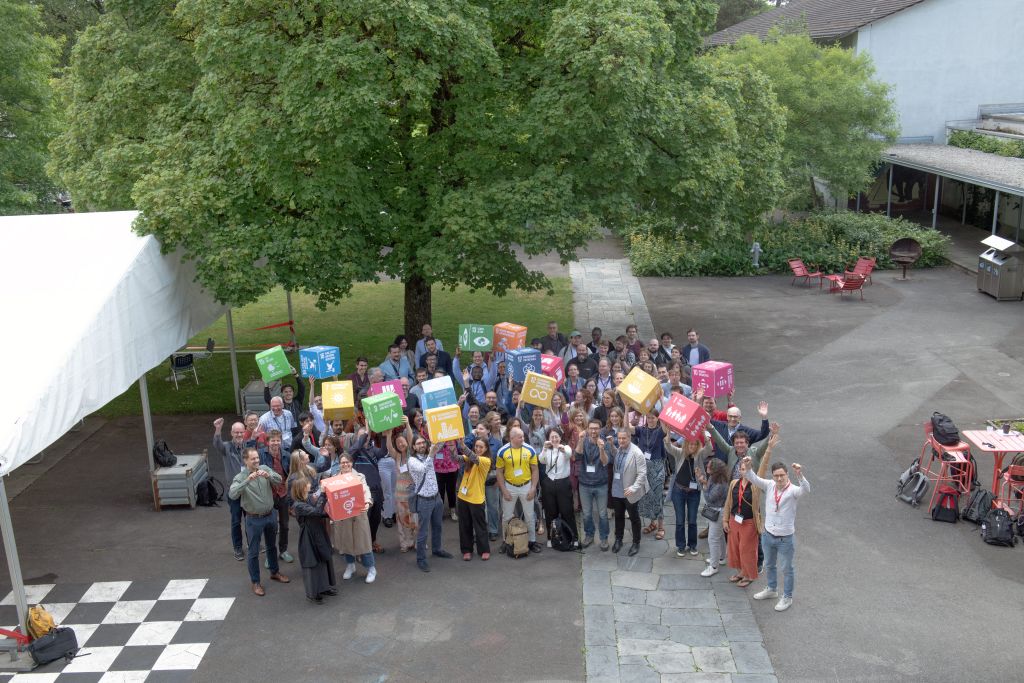
Digital for Planet was proud to participate in the ICT4S 2026, the leading international conference on ICT for Sustainability The twelfth edition was held in Bern, 812 June, hosted by the Bern University of Applied Sciences (BFH).
The conference brought together leading researchers, policymakers, industry leaders, public sector representatives and civil society actors to explore how digital technologies can support environmental, social, economic and technical sustainability.
Industry & Policy Leaders Day: Our Common Digital Future
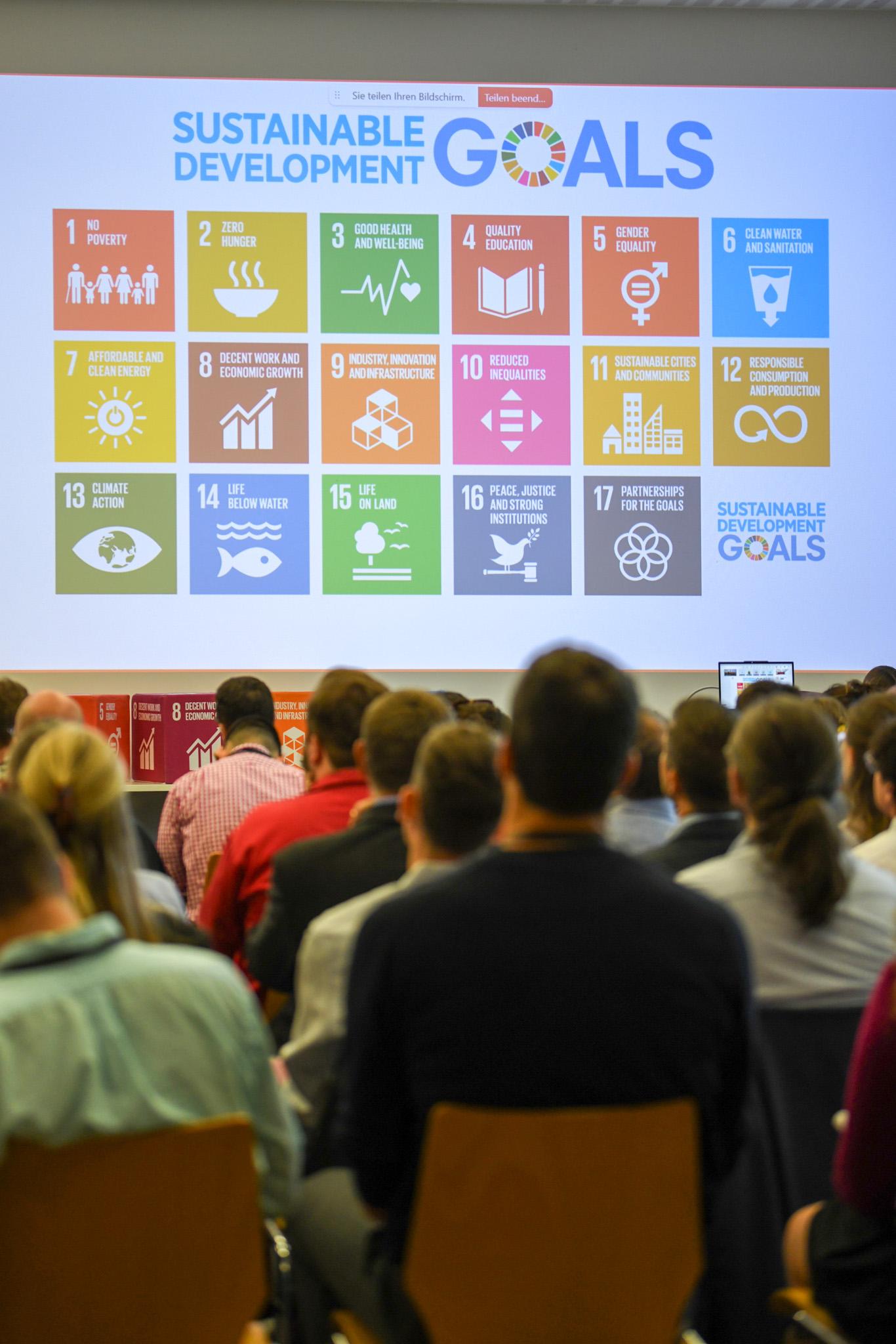
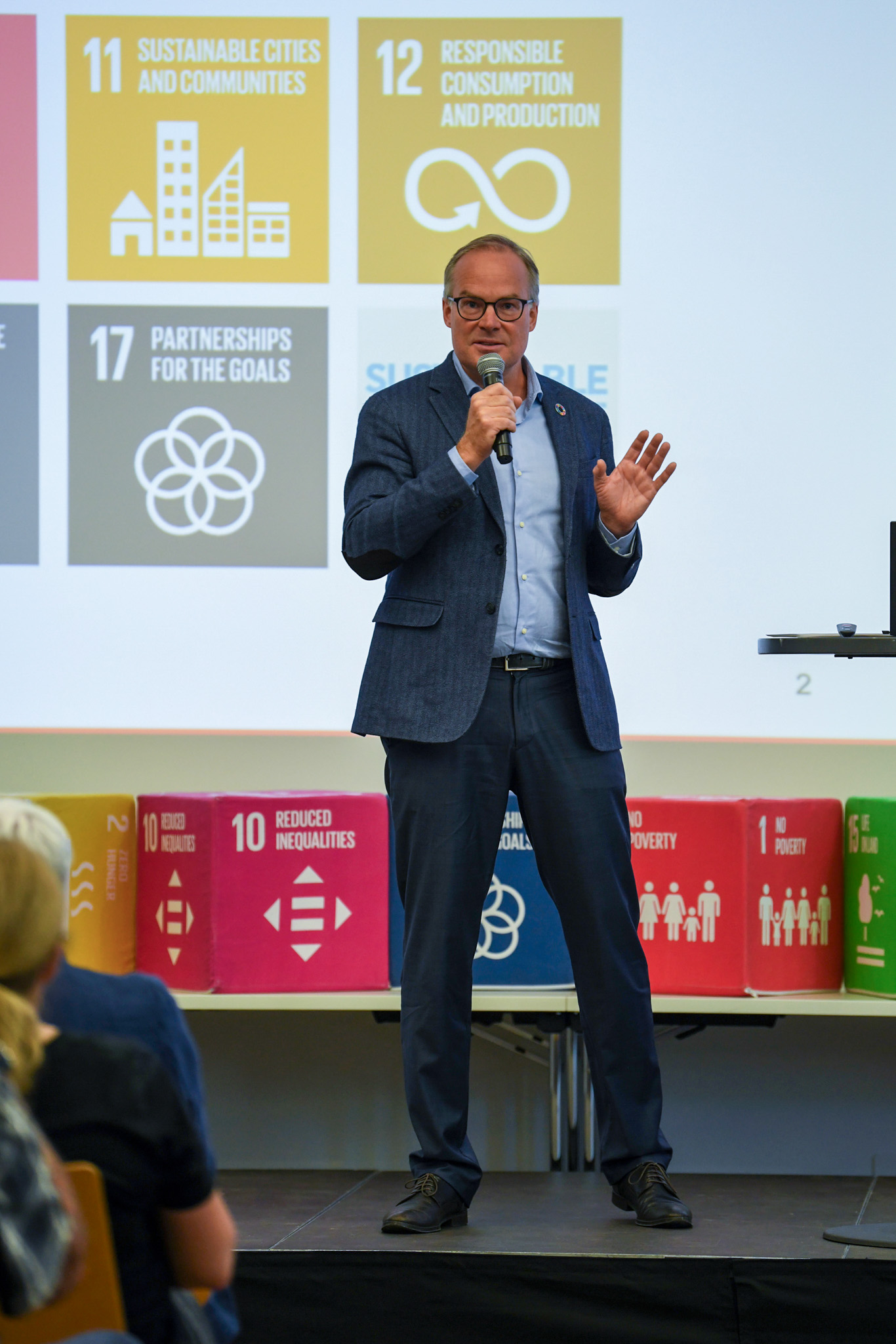
This year’s edition opened with the Industry & Policy Leaders Day on 8 June, dedicated to the theme “Our Common Digital Future”, fostering a cross-sectoral dialogue on how digitalisation can be aligned with the Sustainable Development Goals while respecting planetary boundaries. Digital for Planet’s Director, Dr. Cristina Pereira, was part of the organising committee curating the program together with Prof. Rika Koch, Professor for Public Procurement and Law and Prof. Jan Bieser, Professor for Digitalization & Sustainability, both from the Bern University of Applied Sciences.
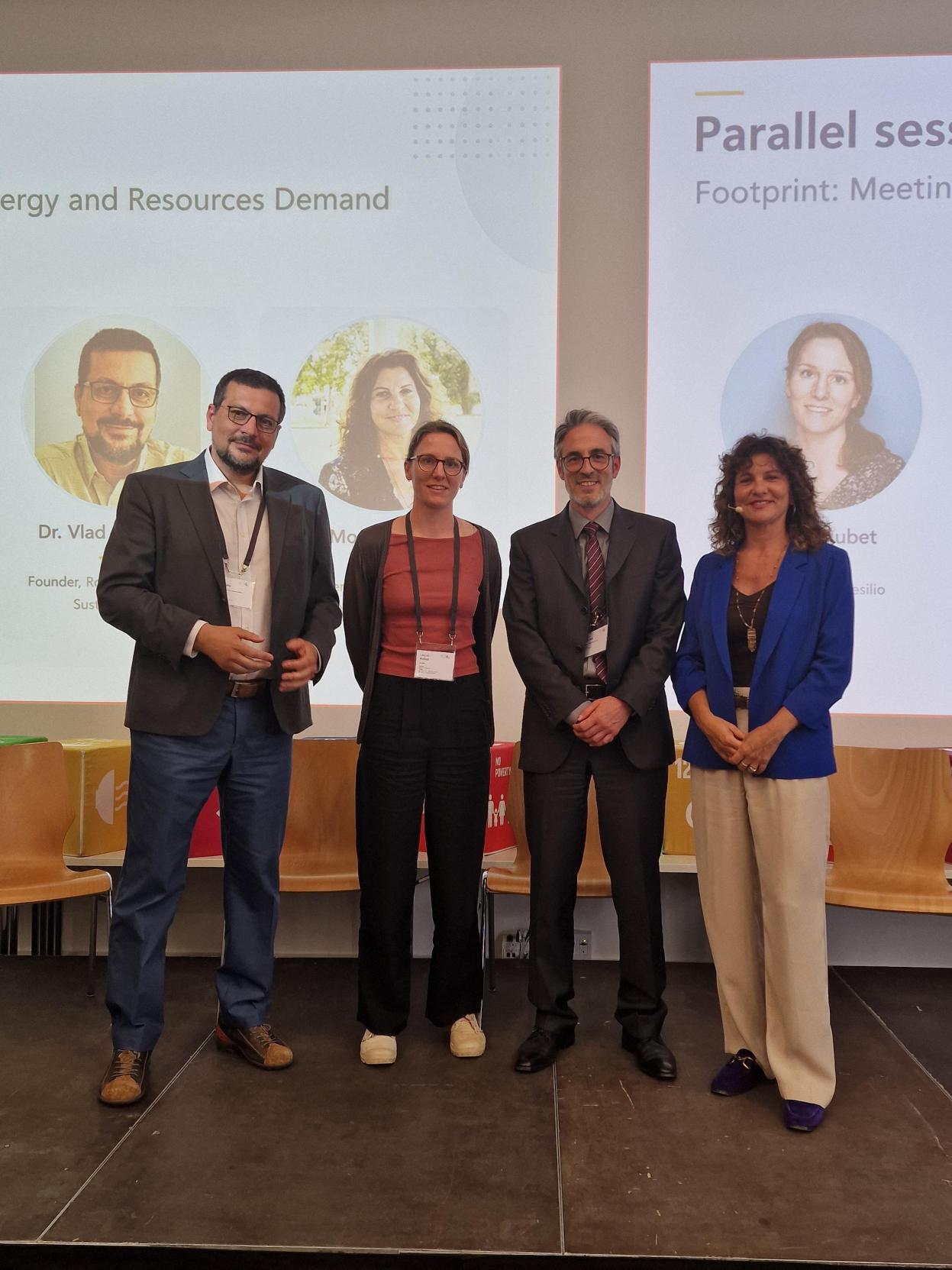
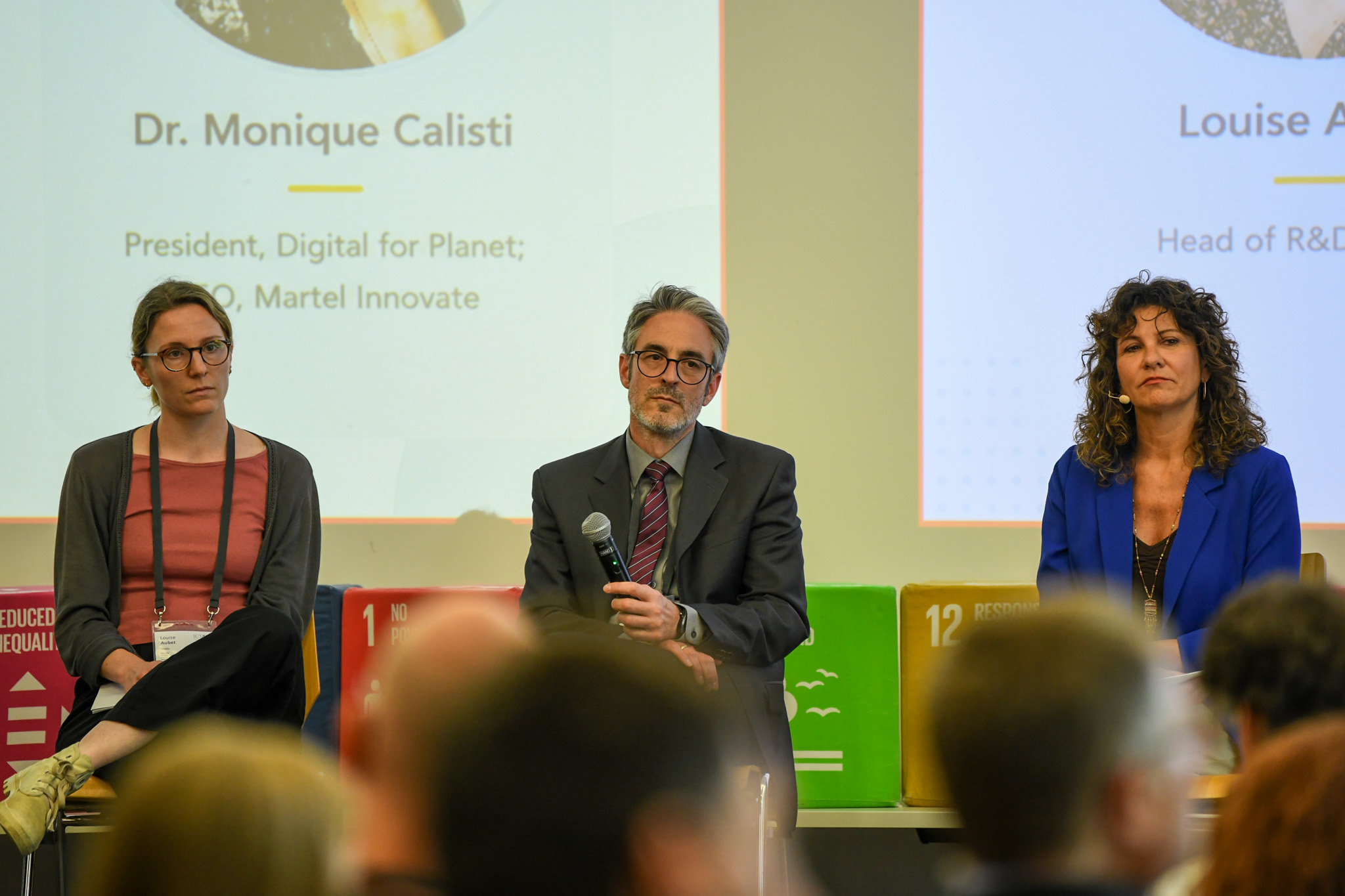
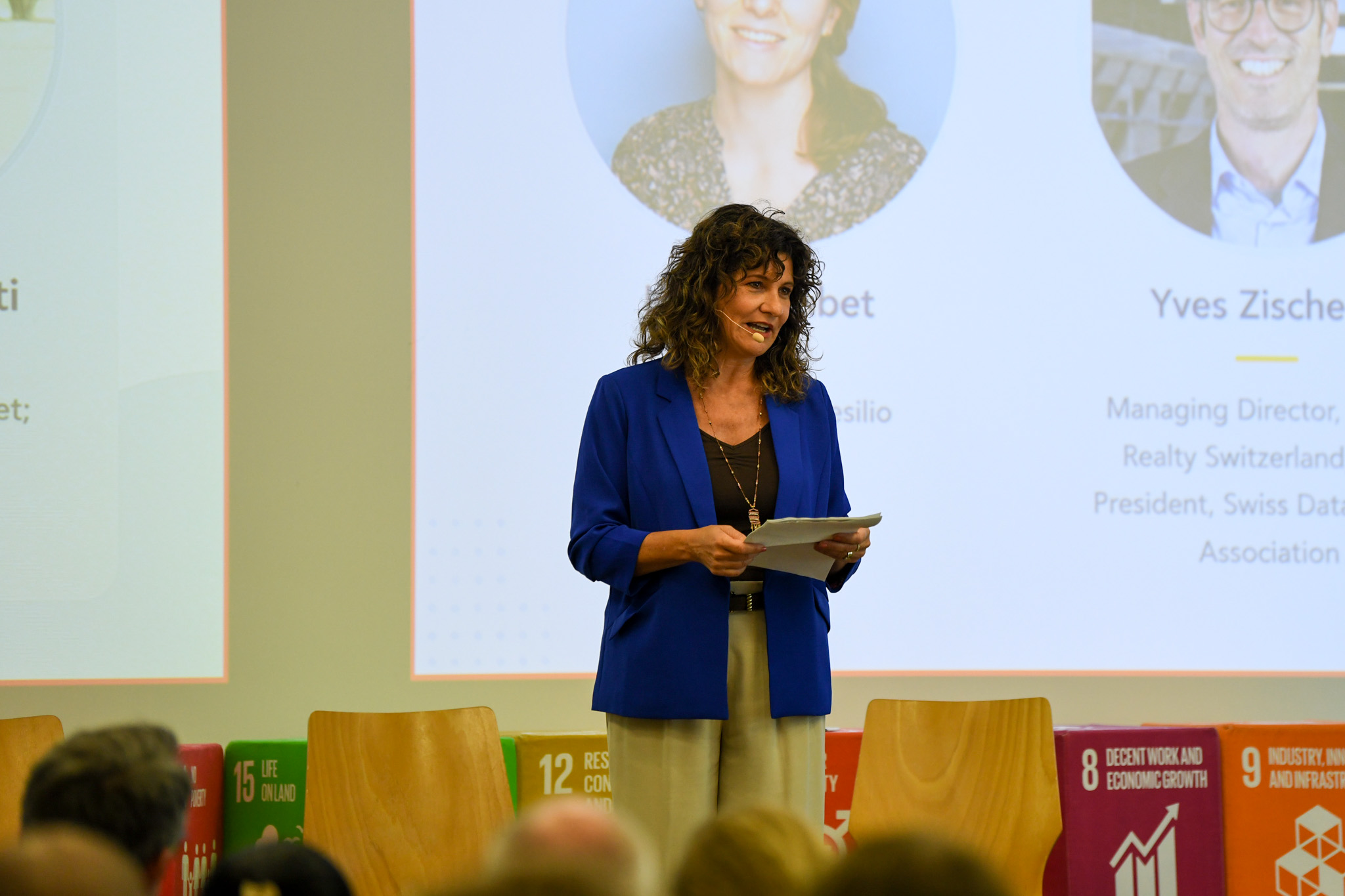
As part of the programme, Dr. Monique Calisti, President and Founder of Digital for Planet, moderated the key session “Footprint: Meeting Digitalization’s Energy and Resource Demand”, which addressed a pressing challenge of the digital transition: the compounding environmental impact of data infrastructure, specifically the massive scaling of data centers required for the training and inference of Artificial Intelligence (AI) models globally.”
The session brought together leading experts from industry and research to examine current impacts and future trajectories:
- Louise Aubet (Head of R&D, Resilio) presented.the results of an in-depth study evaluating the impacts of the ICT sector in Switzerland.
- Yves Zischek (Managing Director, Digital Realty Switzerland; Vice President, Swiss Data Center Association) discussed energy consumption in data centres and strategies for reducing their environmental impact.
- Dr. Vlad Coroamă (Founder, Roegen Centre for Sustainability) examined the implications of data centre growth on energy use, water consumption and CO₂ emissions at the global level.
The discussions highlighted the urgent need to better understand and address the energy and resource demands associated with accelerating digitalisation. As technologies such as AI and data-intensive services continue to expand, ensuring that digital transformation remains compatible with environmental sustainability and respects planetary boundaries is becoming increasingly critical.
Working Towards a Sustainable Digital Future
Other highlights of the program included the opening address of Daniel Dubas, Delegate of the Federal Council for the 2030 Agenda and Head of the Sustainable Development Section at the Swiss Federal Office for Spatial Development (ARE), and the eyeopening and inspiring keynote address of Cecilia Rikap, Professor in Economics and Head of Research at the Institute for Innovation and Public Purpose (IIPP), University College London (UCL).
Dubas presented the worrisome data of the most recent voluntary UN interim report on the Swiss 2030 Sustainable Development Strategy. While positive developments can be observed in areas such as the circular economy, renewable energy, and equality, the pace of implementation remains insufficient. Under current conditions, the goals related to sustainable consumption, climate, biodiversity, poverty reduction, access to affordable housing, and discrimination will be difficult to be achieved by 2030. The 2030 Agenda is hampered by conflicting objectives and a lack of resources. The full detailed report is available at: https://www.sdgital2030.ch/
Prof. Rikap, who just published her third book on “The Rulers: Corporate Power in the Age of AI and the Cloud” (she is also author of “Capitalism, Power and Innovation: Intellectual Monopoly Capitalism Uncovered” and co-author of “The Digital Innovation Race”) presented her work and thoughts on the topic of Digital Sovereignty. Her convincing arguments and data lay down the disturbing reality on how much Europe (and many other countries and regions) and their citizens are heavily dependent on US big tech. Governments around the world are watering down digital policies and regulations due to the pressure of the US government, steward of Big Tech. The result is that they are becoming stronger, in particular, as peripheral regions try to accelerate their AI adoption. To experience the thought-provoking ideas of Prof. Rikap watch her interview to FEPS_Europe https://www.youtube.com/watch?v=cZYa9UIyOIQ&t=630s.
The keynote speeches of Robin Zuercher, lead of the International Telecommunication Union (ITU) Programme Green Digital Action (https://www.itu.int/initiatives/green-digital-action) and Prof. Adrian Friday, Professor of Computing and Sustainability at Lancaster University rounded up the program of a day packed with fantastic insights, worrisome data, critical analysis and reflection masterfully facilitated by Peter Peter Woodward. The loud and clear message is that cooperation among many sectors will be fundamental to how we as a society will address the challenge of expanding the capabilities and the access to digitalization, while not exhausting natural resources and keeping our development within planetary boundaries.
Digital for Planet is proud to contribute to these conversations and to support efforts that advance a responsible, inclusive and sustainable digital future.
About ICT4S 2026
The International Conference on ICT for Sustainability (ICT4S) is a leading forum dedicated to understanding, designing and deploying digital technologies for sustainability. Hosted by the Bern University of Applied Sciences, the 2026 conference featured beyond the Industry & Policy Leaders Day, three research-focused conference days and a concluding programme of workshops and doctoral symposium activities, bringing together stakeholders from academia, industry, government and civil society.