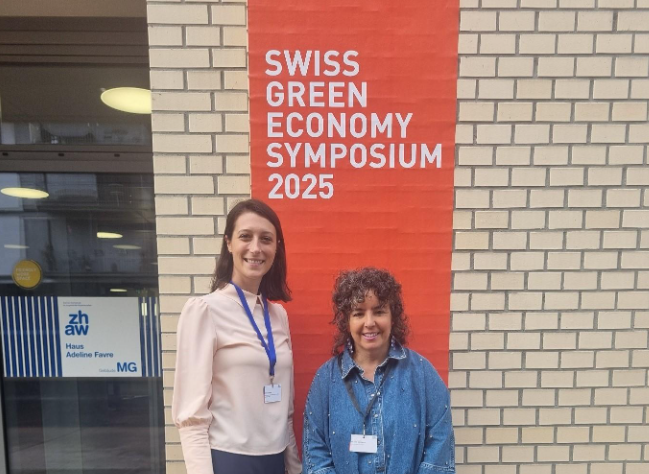
Digital for Planet proudly participated in the 13th edition of the Swiss Green Economy Symposium (SGES), Switzerland’s most influential platform for dialogue and action on sustainable innovation. Held in Winterthur under the theme “Leinen los für Nachhaltigkeit” (“Cast off for Sustainability”), the event brought together more than 2,000 participants and over 250 speakers from across Europe and beyond, including key players from business, research, government, and civil society.
Spanning two and a half days, SGES 2025 offered a diverse and in-depth programme including two plenary sessions, 18 innovation forums, and a series of field visits to sustainability-driven companies. The symposium provided an engaging platform to connect ideas, share practical experiences, and co-create solutions for an inclusive green transition.
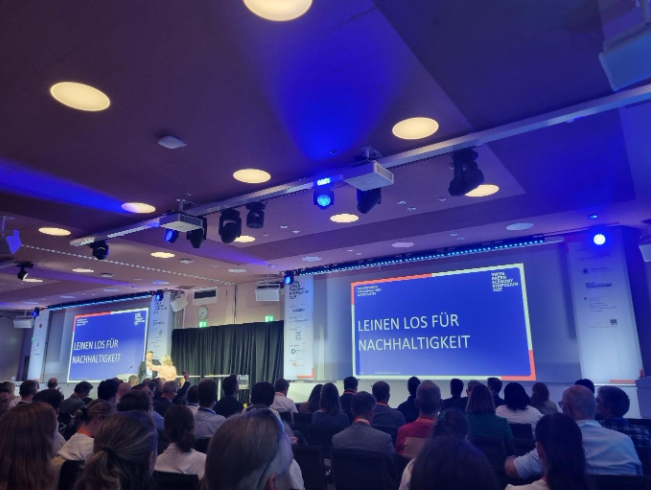
Bringing digital to the sustainability dialogue
Digital for Planet participated to three Innovation Forums that aligned strongly with its mission to integrate digital transformation into sustainability frameworks. These sessions covered a wide range of topics, from communication and finance to sustainable cities, highlighting how digital technologies can unlock systemic change.
Digital tools for transparent and impactful sustainability communication
On 3 September, Digital for Planet took part in the Innovation Forum “Sustainability Communication and Reporting” (IF.07), which explored how organisations can use strategic communication, digital innovation, and credible reporting to drive real climate action.
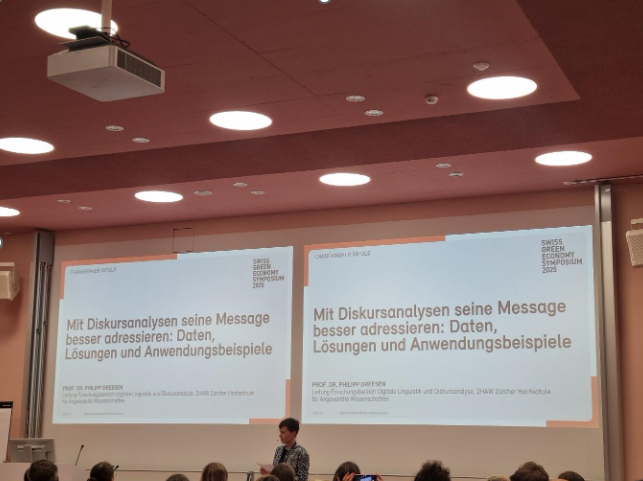
The forum examined the evolution of sustainability reporting, from a compliance exercise to a tool for continuous improvement and engagement. Professor Philipp Dreesen from Zurich University of Applied Sciences (ZHAW) introduced how discourse analysis and digital linguistics can tailor communication to diverse audiences, making sustainability efforts more relatable and effective.
Case studies from Lidl Switzerland and Lidl Spain demonstrated the power of compelling and transparent storytelling in building trust. Speakers from Myclimate, Matterhorn Gotthard Bahn, and Alternative Bank Schweiz highlighted how data-driven reporting can become a strategic instrument for sustainability impact. Almut Sanchen (EnAW) added that strong internal communication frameworks are essential to support consistent, credible external messaging.
The session made it clear that digital tools, from AI-powered reporting platforms to audience analysis methods, are critical to making sustainability communication more meaningful and measurable.
Innovative finance models to close the sustainability funding gap
On 4 September, Digital for Planet joined the Innovation Forum “Innovative Financing: Scaling Impact through Public–Private–Non-Profit Collaboration” (IF.05). With a global SDG financing gap estimated at $4 trillion, the session focused on how blended finance, digital transparency, and systemic collaboration can unlock new capital for sustainable development.
Markus Reubi of the Swiss Federal Government opened the forum by emphasizing the urgent need to accelerate capital mobilisation for climate and development goals.
Foteini Katzilaki (Oikocredit) highlighted the challenge of aligning investor expectations with long-term sustainability returns, calling for clearer digital metrics and stronger risk mitigation strategies.
The forum underscored the value of standardised reporting, digital tracking tools, and trust-based partnerships to scale investment for sustainability, and how digital innovation can make this ecosystem more accessible and efficient.
Rethinking urban futures through data, design, and citizen engagement
The Innovation Forum “Sustainable Urban Development: Synergies for Change” (IF.08), co-moderated by Prof. Vicente Carabias (ZHAW) and the City of Winterthur, brought together urban planners, city officials, researchers, and private sector leaders to explore how digital and social innovations are transforming urban landscapes.
Martina Rechsteiner from the Future City Alliance emphasised the critical role of collaborative city networks in building momentum for sustainable transformation. Heinz J. Bernegger (Swiss Society for Sustainable Real Estate and ZHAW) and Nina Cavigelli from Winterthur’s Office for Urban Development presented Winterthur as a leading example of climate-positive city planning, highlighting initiatives that integrate sustainable construction, inclusive mobility, and participatory governance.
In a concluding panel, among many statements the one of David Avery of the Urban Technology Alliance stood out: the success of climate-neutral cities depends on active citizen engagement across all stages, from visioning and planning to implementation and evaluation. He further emphasised the importance of cross-border cooperation, open data sharing, and peer learning among cities of all sizes to scale up successful models.
SGES 2025: A springboard for collaboration and action
At SGES 2025 a clear theme emerged: the digital transition must be inclusive, transparent, and aligned with ecological and social priorities.
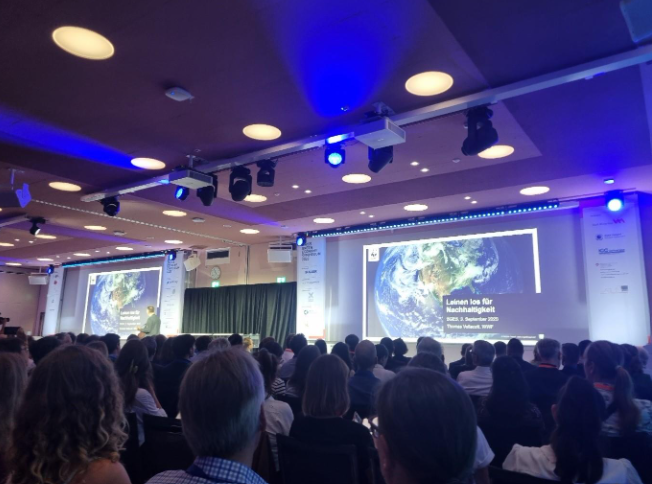
Participation in SGES 2025 provided the opportunity to exchange ideas with top researchers, innovators, and decision-makers, while forging new collaborations that will help expand Digital for Planet’s work across Europe and beyond. The insights gained from Winterthur will inform the organisation’s future efforts to connect the dots between digital innovation, citizen empowerment, and sustainable development.
As Europe continues to define its role in a rapidly evolving digital and ecological landscape, Digital for Planet remains committed to ensuring that technology serves the planet and people.